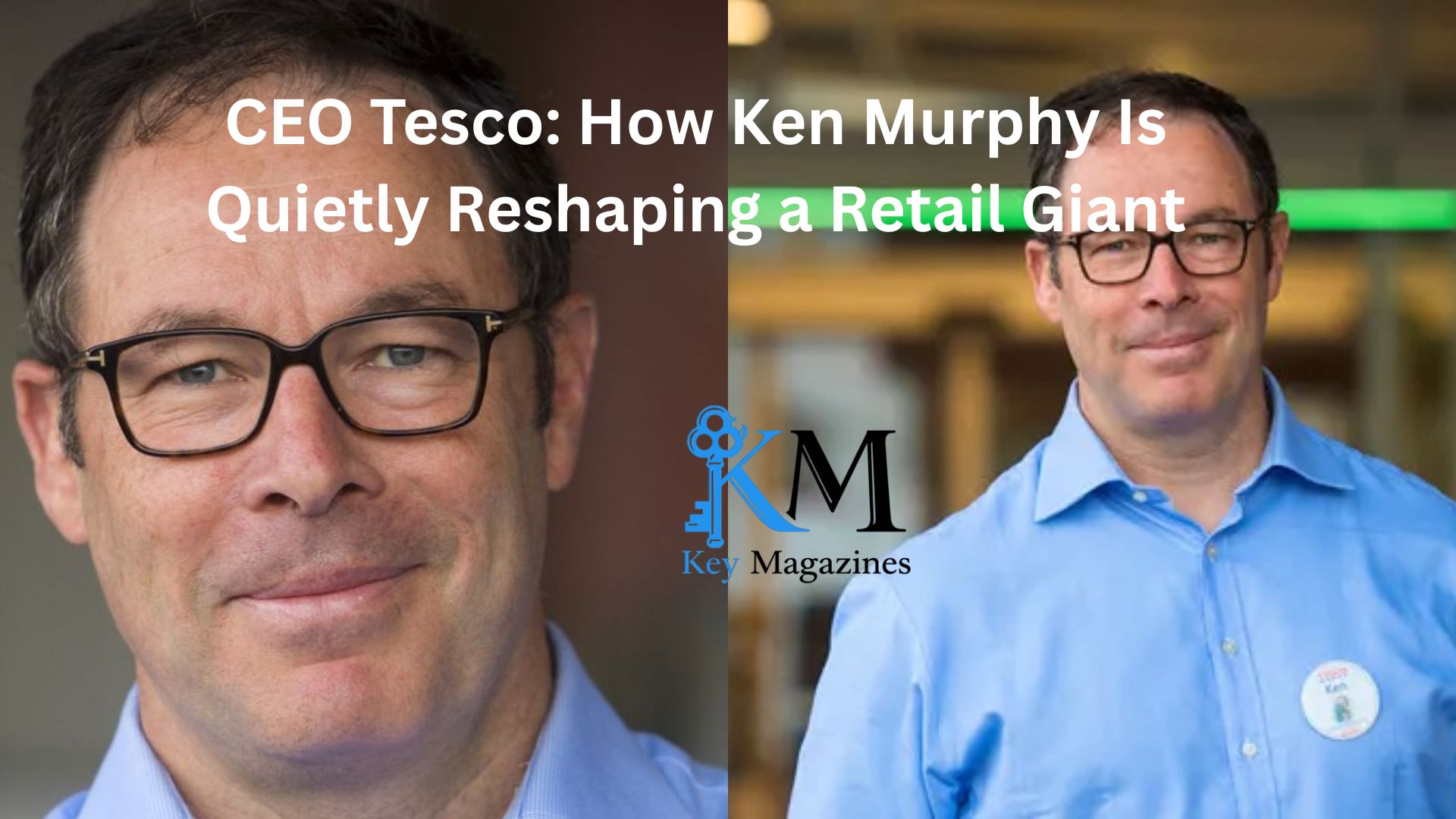
There’s something interesting about the way Ken Murphy runs Tesco. It’s not loud. It’s not flashy. And that’s exactly why it works.
In a world where CEOs often chase headlines, Murphy seems more focused on shelves, pricing, and the everyday shopper walking into a store on a Tuesday evening. That might sound simple. It isn’t. Running one of the largest retailers in the world means making thousands of small decisions that quietly shape how millions of people shop, eat, and spend.
If you’ve ever grabbed a meal deal, switched to a cheaper own-brand product, or noticed prices holding steady when everything else felt like it was going up, you’ve felt his influence without realizing it.
From pharmacy to food aisles
Murphy didn’t come up through Tesco’s ranks. That alone makes him a bit different.
Before stepping into the CEO role in 2020, he spent years at Walgreens Boots Alliance. That background matters more than it first appears. Pharmacy retail is all about precision, trust, and consistency. You can’t fake those things when people rely on you for essential products.
Now bring that mindset into grocery retail.
Instead of chasing trends, Murphy leans into reliability. Keep shelves stocked. Keep prices competitive. Keep customers coming back. It’s not glamorous, but it’s solid.
Think about it like this. If a customer walks into a Tesco store expecting to find milk, bread, and decent prices, and they don’t… that’s not just a bad visit. That’s a broken promise. Murphy seems to understand that deeply.
The timing couldn’t have been tougher
He took over in October 2020. Not exactly a calm period.
The pandemic had already shaken supply chains, changed shopping habits overnight, and pushed supermarkets into overdrive. Online grocery demand exploded. Stores became essential lifelines. Every decision carried weight.
Here’s the thing. Many leaders would have focused on short-term wins. Keep things running. Deal with the chaos. Move on.
Murphy went a bit further.
He doubled down on Tesco’s core strengths while quietly strengthening areas that had been under pressure for years. Online shopping became smoother. Delivery capacity improved. Stores adapted faster than people expected.
You could see it in small moments. Fewer empty shelves. Better substitutions in online orders. Click-and-collect slots that didn’t feel impossible to book.
Nothing dramatic. But it added up.
The price war reality
Let’s be honest. Grocery retail is brutal.
Margins are thin. Customers are price-sensitive. Competitors are relentless. And in the UK, you’ve got serious pressure from discounters like Aldi and Lidl.
Murphy’s response hasn’t been to out-shout them. It’s been to out-position them.
He’s leaned heavily into Tesco’s Clubcard pricing strategy. If you’ve shopped there recently, you’ve seen it everywhere. Two prices. One for regular customers. One for Clubcard users.
At first glance, it’s just a loyalty scheme tweak. But it’s more strategic than that.
It lets Tesco stay competitive on key items without slashing prices across the board. It rewards repeat customers. And it gives shoppers a sense that they’re getting a deal without turning the entire store into a discount warzone.
A quick scenario. You walk in planning to buy a few essentials. You notice a Clubcard price that’s noticeably lower. You scan your card. You feel like you’ve saved money. You’re more likely to come back.
That’s not accidental. That’s design.
Not chasing trends, but not ignoring them either
Retail loves trends. Plant-based food. rapid delivery. subscription models. You name it.
Murphy’s approach feels more measured.
Tesco hasn’t ignored trends, but it hasn’t gone all-in on every new idea either. Instead, it tests, adjusts, and scales what actually works.
Take online grocery. The pandemic forced rapid growth, but Tesco didn’t treat it as a temporary spike. It invested in infrastructure, improved logistics, and made the experience more reliable.
Or look at own-brand products. Instead of trying to compete only with premium ranges, Tesco has strengthened its value tiers. That matters when customers are watching every pound.
Here’s the thing. Trends come and go. Habits stick. Murphy seems focused on the latter.
The shadow of Dave Lewis
You can’t talk about Tesco’s current leadership without mentioning Dave Lewis.
Lewis came in during a crisis. Accounting issues. Falling trust. A business that needed stabilizing fast. He did the heavy lifting. Cut costs. Simplified operations. Rebuilt credibility.
Murphy inherited a more stable company, but also a more competitive landscape.
That creates a different kind of pressure. It’s one thing to fix a broken business. It’s another to keep a functioning one ahead of rivals who are constantly trying to catch up.
Murphy’s style reflects that shift. Less turnaround, more refinement. Less emergency action, more long-term positioning.
The quiet power of consistency
If you ask most shoppers what they think about Tesco’s CEO, they probably won’t have an answer. And that’s kind of the point.
Murphy’s impact shows up in consistency.
Prices that don’t jump unpredictably. Stores that feel familiar. Products that are where you expect them to be. It’s easy to overlook, but it builds trust over time.
Imagine two supermarkets. One has flashy promotions but feels chaotic. The other feels steady, predictable, reliable. Most people, especially during uncertain times, will choose the second.
That’s where Tesco sits right now.
Handling inflation without losing customers
Recent years haven’t been easy for anyone shopping for groceries. Prices have risen. Budgets have tightened. People have started making harder choices.
Murphy’s challenge has been to balance business reality with customer expectations.
You can’t absorb all cost increases. That’s not sustainable. But you also can’t pass everything on to customers without losing them.
Tesco’s response has been a mix of price matching, targeted discounts, and stronger value ranges.
For example, matching prices with discounters on key items helps protect perception. Expanding affordable own-brand options gives customers alternatives without forcing them to switch stores.
Picture a family doing their weekly shop. They’re comparing prices more than they used to. They’re cutting back on extras. If Tesco can keep their essentials affordable, that family stays.
That’s the game.
Leadership style: calm over charisma
Murphy isn’t the kind of CEO who dominates headlines with bold statements. His style leans more toward calm execution.
That doesn’t mean passive. It means controlled.
He focuses on the fundamentals. Supply chain efficiency. pricing strategy. customer experience. Staff operations.
It’s a bit like a good restaurant manager. You don’t notice them when things are going well. But their presence is felt in every smooth interaction.
There’s also something refreshing about that. Not every leader needs to be a personality. Sometimes, being effective is enough.
The role of staff and store culture
It’s easy to talk about strategy at a high level. But retail lives and dies at store level.
Murphy has put effort into improving working conditions and staff engagement. Better pay structures. clearer roles. more support during peak periods.
Why does that matter?
Because a well-run store depends on motivated staff. If employees feel stretched or undervalued, it shows. Shelves don’t get restocked as quickly. Customer service slips. The whole experience changes.
Think about the difference between a rushed, stressed cashier and one who’s calm and helpful. It affects how you feel about the store, even if everything else is the same.
Murphy seems to understand that operational details and people management are tightly connected.
What still needs work
No CEO gets everything right. And Tesco still faces challenges.
Competition isn’t slowing down. Aldi and Lidl continue to grow. Online players are evolving. Customer expectations keep shifting.
There’s also the question of innovation. While Murphy’s cautious approach works, there’s always a risk of falling behind if you move too slowly.
Some critics argue Tesco could push harder in areas like technology or new retail formats. Others think its strength lies in staying focused on what it already does well.
Both sides have a point.
The balance between stability and innovation is tricky. Lean too far either way, and problems start to show.
Why Murphy’s approach works right now
Timing matters in leadership.
Right now, many customers don’t want surprises. They want reliability. Fair pricing. A shopping experience that doesn’t feel stressful.
Murphy’s approach fits that mood.
Instead of trying to reinvent Tesco, he’s refining it. Making it sharper. More responsive. More aligned with what customers actually need.
It’s a bit like tuning an engine rather than replacing it. Less dramatic, but often more effective.
The bigger picture
Tesco isn’t just a supermarket chain. It’s part of daily life for millions of people. That makes the CEO’s role more complex than it might seem.
Every pricing decision affects household budgets. Every supply chain issue affects availability. Every strategic move shapes how people shop.
Murphy’s leadership reflects an understanding of that responsibility.
He’s not trying to be the most talked-about CEO. He’s trying to run a business that works, day in and day out.
Final thoughts
Here’s the simple takeaway.
Ken Murphy’s impact on Tesco isn’t about big gestures. It’s about steady improvement. Quiet decisions that make shopping a little easier, a little cheaper, a little more predictable.
That might not grab headlines. But it builds something more valuable over time: trust.
And in retail, trust is everything.