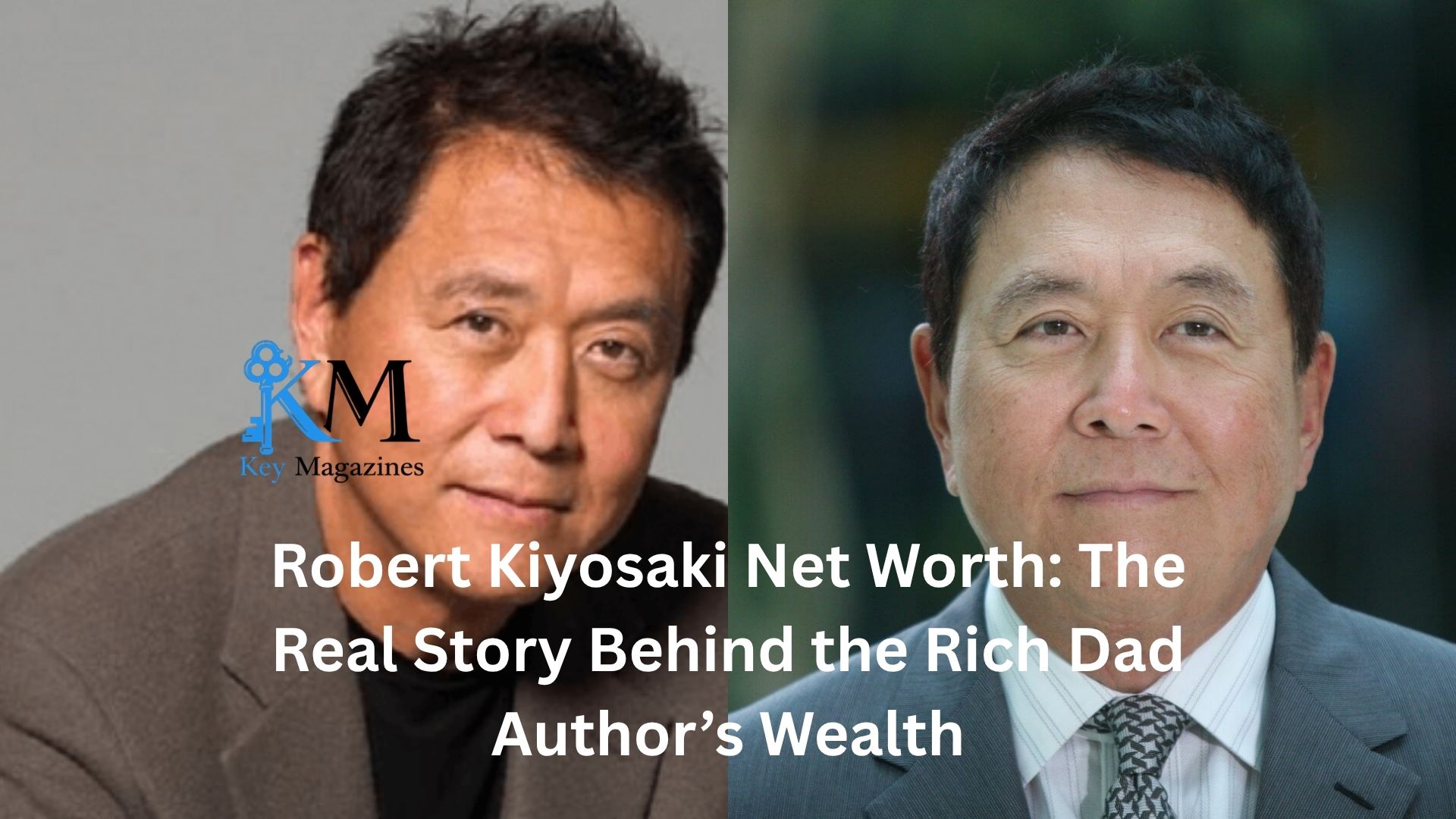
If you’ve ever picked up Rich Dad Poor Dad, you’ve probably wondered the same thing most readers do at some point: how much money does Robert Kiyosaki actually have?
It’s a fair question. After all, he built a global brand teaching financial freedom, investing, and escaping the 9-to-5. But when it comes to his own net worth, things aren’t as clean and straightforward as you might expect.
Let’s unpack it properly—no hype, no blind admiration, just a clear look at what’s going on.
So, What Is Robert Kiyosaki’s Net Worth?
Most estimates put Robert Kiyosaki’s net worth somewhere between $80 million and $100 million.
That number floats depending on the source, and honestly, it’s not surprising. His income doesn’t come from a single predictable stream like a CEO salary. It’s spread across books, seminars, licensing deals, real estate, and investments—some of which are private and hard to pin down.
But here’s where it gets interesting.
Kiyosaki himself has often said that income matters more than net worth. That’s very on-brand for him. He focuses heavily on cash flow—money coming in regularly—rather than just a big number on paper.
Still, the number matters because it raises a bigger question: did he get rich the way he teaches others to?
How He Actually Built His Wealth
Most people assume Kiyosaki made his fortune purely from investing in real estate or stocks. That’s only part of the story.
His biggest financial breakthrough came from something else entirely—content and education.
The Book That Changed Everything
Rich Dad Poor Dad, first published in 1997, didn’t just sell well—it exploded. Over 40 million copies sold worldwide. Translated into dozens of languages. It became one of the most recognizable personal finance books ever.
But here’s the thing: authors don’t usually become ultra-wealthy from book sales alone.
The real money came from what followed.
Turning a Book Into a Business Machine
Kiyosaki built a system around his ideas.
Seminars. Workshops. Coaching programs. Branded board games like CASHFLOW. Licensing deals. Speaking engagements.
Imagine someone reads the book, gets inspired, and then signs up for a $500 seminar. Then maybe a $5,000 course. Multiply that by thousands of people over decades.
That’s where the scale kicks in.
And yes, this model has drawn criticism. Some people swear by his teachings. Others feel the seminars are overpriced or too sales-heavy. Both can be true depending on the experience.
His Real Estate Philosophy—and Reality
Kiyosaki talks a lot about real estate. Leverage. Cash-flowing properties. Using “good debt” to build wealth.
And to be fair, he has invested in real estate over the years.
But the exact size and performance of his property portfolio? That’s less transparent.
He’s mentioned owning apartment complexes and commercial properties, often financed through debt. That aligns with his philosophy: use other people’s money to acquire assets.
Here’s a simple example of what he teaches:
You buy a rental property using a loan. The rent covers the mortgage, expenses, and leaves you with a small monthly profit. Over time, rents go up, the loan gets paid down, and the property value increases.
That’s the ideal scenario.
But real estate isn’t always that clean. Markets shift. Tenants leave. Costs rise.
Kiyosaki tends to focus on the upside. Critics point out he doesn’t always dwell on the risks.
The Bankruptcy Question
Now let’s address something that often comes up: bankruptcy.
In 2012, one of Kiyosaki’s companies—Rich Global LLC—filed for bankruptcy after losing a lawsuit. They were ordered to pay millions to a business partner.
That headline made waves. People started asking: how can a financial guru go bankrupt?
Here’s the nuance.
It wasn’t a personal bankruptcy. It was a corporate one. And in the business world, that’s not unusual. Companies fail or restructure all the time, even when their founders are personally wealthy.
Still, it did raise eyebrows. And it’s one of those moments that makes people look more critically at his advice.
Income vs Net Worth: His Core Idea
If there’s one concept Kiyosaki repeats constantly, it’s this:
Cash flow beats net worth.
He’d rather have assets that generate money every month than a big pile of money sitting still.
Think about it like this.
Would you rather have $5 million in a bank account earning minimal interest, or assets that generate $50,000 a month consistently?
That’s the lens he uses.
It’s also why his net worth might look “lower” compared to some other financial personalities. He’s not trying to compete on headline numbers. He’s playing a different game—or at least that’s the idea.
The Brand Is the Real Asset
Let’s be honest for a second.
Kiyosaki’s most valuable asset isn’t a building or a stock portfolio. It’s his brand.
The “Rich Dad” identity has been incredibly durable. Decades later, people still discover the book, still share quotes, still debate his ideas.
That brand opens doors:
- Speaking fees
- Partnerships
- Media appearances
- Ongoing product sales
It’s the kind of asset that doesn’t show up neatly in net worth calculations but drives income year after year.
A simple way to picture it: someone who builds a recognizable name can keep earning long after the initial work is done. That’s exactly what he’s done.
Criticism You Shouldn’t Ignore
Kiyosaki has a loyal following, but he’s not universally respected. And it’s worth understanding why.
Some critics argue that his advice is too vague or overly simplified. Others say it leans heavily on motivation rather than actionable detail.
Then there’s the issue of timing.
He’s made bold predictions about economic crashes, currency collapses, and asset booms—some accurate, others not so much.
If you followed every prediction blindly, you’d probably have a mixed track record.
Here’s the thing: his work is better seen as a mindset shift, not a precise roadmap.
He gets people thinking about assets, liabilities, and financial independence. That’s valuable. But turning that mindset into real-world results requires more nuance than his books sometimes provide.
Why People Still Follow Him
Despite the criticism, Kiyosaki’s influence hasn’t faded.
Why?
Because he speaks to a frustration many people feel.
Working hard, earning a decent salary, and still feeling stuck financially. That hits home for a lot of readers.
His message—build assets, escape the rat race—offers a way out. Or at least the idea of one.
And even if someone doesn’t follow his advice exactly, the shift in thinking can lead them to explore investing, business, or financial education more seriously.
That’s powerful.
A More Grounded Way to Look at His Wealth
So where does that leave us?
Robert Kiyosaki is wealthy. That’s clear. His net worth in the tens of millions reflects decades of building a global brand and monetizing it effectively.
But his wealth didn’t come purely from textbook investing strategies.
It came from:
- Packaging ideas in a compelling way
- Building a scalable business around those ideas
- Leveraging attention into income streams
That’s a different kind of financial success than what many people expect when they first hear his name.
And it’s worth keeping that distinction in mind.
The Takeaway
If you strip away the hype, the debates, and the headlines, here’s what really matters.
Kiyosaki isn’t just an investor. He’s an entrepreneur who turned financial education into a business empire.
His net worth—whether it’s $80 million or $100 million—is a result of that.
There’s something useful in his message, especially around thinking differently about money. But it’s not a complete playbook. It’s a starting point.
If you read him that way, you’ll get value. If you expect a guaranteed formula for wealth, you’ll probably be disappointed.
And maybe that’s the most honest way to look at it.