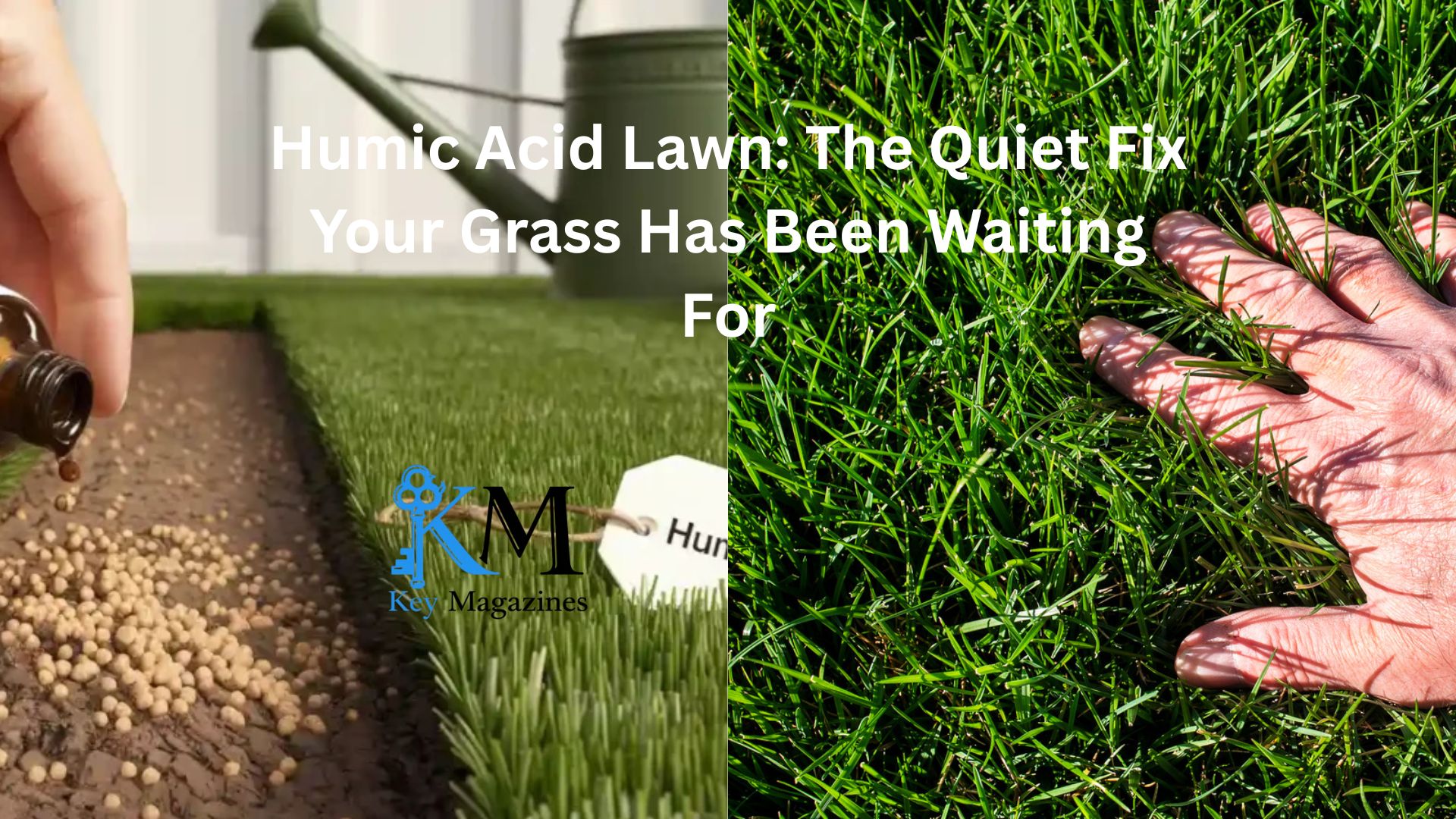
Most lawn problems don’t start where you think they do.
Yellow patches, thin growth, stubborn bare spots. People usually blame watering, fertilizer, or even the weather. Sometimes they’re right. But often, the real issue is hiding underground, in the soil itself.
That’s where humic acid comes in. Not flashy. Not heavily marketed like quick-green fertilizers. But surprisingly effective when your lawn just won’t cooperate.
If you’ve ever felt like you’re doing everything “right” and still not getting that thick, healthy grass, this might be the missing piece.
What Humic Acid Actually Does (Without the Science Lecture)
Let’s keep it simple.
Humic acid is a natural compound formed from decomposed organic matter. Think ancient plant material broken down over time into something rich and complex. When you add it to your lawn, you’re not feeding the grass directly. You’re improving the environment it grows in.
And that distinction matters.
It works more like a soil conditioner than a fertilizer. It helps your soil hold onto nutrients instead of letting them wash away. It improves how water moves through the ground. It even helps roots access minerals that were already there but basically locked up.
Here’s a relatable way to think about it.
Imagine your lawn is a houseplant sitting in poor-quality potting mix. You can keep adding plant food, but if the soil is compacted and lifeless, growth stays weak. Fix the soil, and suddenly everything else works better.
That’s humic acid.
Why Some Lawns Struggle No Matter What You Do
You water regularly. You fertilize on schedule. Maybe you even aerate once a year.
Still, the lawn looks tired.
Here’s the thing. A lot of soil, especially in newer neighborhoods or areas with construction history, is basically stripped and compacted. It’s low in organic matter. That means poor structure, weak microbial life, and limited nutrient availability.
So even when you add fertilizer, a good chunk of it either leaches away or sits there unused.
I’ve seen lawns where people doubled their fertilizer just to get a mild improvement. That’s not a sustainable fix. It’s like trying to fix bad sleep with more coffee.
Humic acid doesn’t force growth. It supports it. It makes everything else you’re already doing more effective.
The Subtle but Real Benefits You’ll Notice
This isn’t one of those overnight transformation products. You won’t wake up to a golf course lawn after one application.
But give it a few weeks, and changes start showing up.
Grass color deepens. Not neon green, but a healthier, richer tone. The kind that looks natural.
Watering becomes more efficient. The soil holds moisture longer, which is especially helpful in hot climates where lawns dry out fast.
Roots grow deeper. That’s a big one. Deeper roots mean better drought resistance and stronger overall turf.
And here’s something people don’t always expect: less stress damage. Lawns treated with humic acid tend to bounce back faster after heat waves, heavy foot traffic, or inconsistent watering.
It’s not magic. It’s just better soil doing its job.
Liquid vs Granular: Does It Matter?
You’ll come across both.
Liquid humic acid is easier to apply and acts faster. It’s usually sprayed with a hose-end sprayer or mixed in a tank. Great if you want quicker results or you’re already used to spraying treatments.
Granular takes longer to break down but lasts longer in the soil. It’s more of a slow-release approach.
If you’re just starting out, liquid is often simpler. You can see how your lawn responds and adjust from there.
Some people use both over time. Liquid for quick improvements, granular for long-term soil building.
There’s no strict rule here. It depends on how hands-on you want to be.
When to Apply It for the Best Results
Timing isn’t complicated, but it does matter.
Humic acid works best when your lawn is actively growing. That means spring through early fall for most grass types.
Applying it during extreme heat or when your lawn is dormant won’t do much. The soil biology slows down, and the benefits don’t fully kick in.
A good rhythm is every 4 to 6 weeks during the growing season. You don’t have to be exact. This isn’t one of those “miss a day and it fails” products.
Consistency beats perfection.
How It Fits Into Your Existing Lawn Routine
You don’t need to replace anything.
That’s one of the nice things about humic acid. It works alongside your current routine.
Still using fertilizer? Good. Humic acid helps your lawn use it more efficiently.
Watering regularly? Even better. Improved soil structure means that water actually stays where it’s needed.
Aerating once a year? Keep doing it. Humic acid complements that by improving what’s happening between those aeration cycles.
It’s not a competing solution. It’s more like an upgrade to everything else.
A Quick Real-Life Scenario
Picture this.
Two neighbors. Same grass type. Same climate.
One sticks to fertilizer and watering. The lawn looks okay most of the time, but struggles in heat and needs frequent touch-ups.
The other adds humic acid every month or so. Doesn’t change much else.
After a season, the difference becomes noticeable. Not dramatic at first glance, but clear if you pay attention. Thicker turf. Fewer dry spots. Better color consistency.
The second lawn just looks… easier to maintain.
That’s usually how this plays out.
Common Mistakes People Make
Overthinking it is the big one.
Some people treat humic acid like a precise chemical that needs exact measurements and perfect timing. It’s not that fragile.
Another mistake is expecting instant results. This isn’t a quick-fix product. It builds over time.
Then there’s the “more is better” approach. Dumping excessive amounts won’t speed things up. It just wastes product.
And finally, ignoring the basics. Humic acid won’t fix extreme neglect. If the lawn is severely compacted, bone dry, or completely nutrient-starved, you still need to address those issues.
Think of it as a support system, not a miracle cure.
Is It Worth Using?
Short answer: yes, if your lawn feels stuck.
Not every lawn needs it. If you’ve got rich, dark, crumbly soil and your grass is thriving, you might not notice a huge difference.
But most residential lawns don’t fall into that category.
If your grass struggles despite regular care, or if your soil feels hard, dry, or lifeless, humic acid can make a real impact.
It’s one of those quiet improvements. You don’t always notice it immediately, but over time, it changes how your lawn behaves.
The Takeaway
A healthy lawn isn’t just about what you put on top. It’s about what’s happening underneath.
Humic acid works where most problems begin. It strengthens the soil, improves efficiency, and helps your lawn use what it already has.
You won’t get instant perfection. But you will get a lawn that responds better, recovers faster, and looks more naturally healthy.
And honestly, that’s what most people are after. Not a perfect lawn, just one that finally feels like it’s working with you instead of against you.