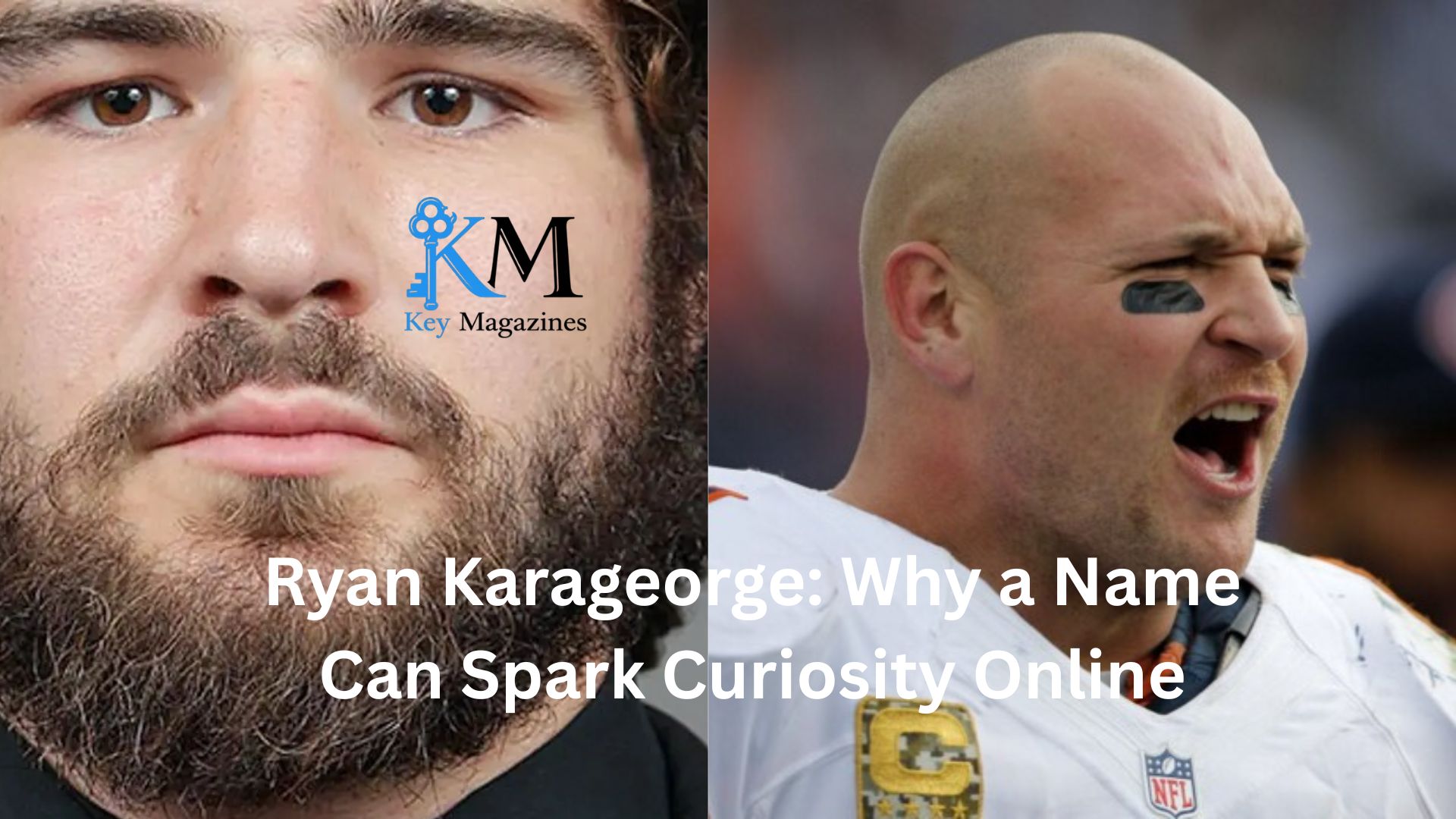
Some names make people stop and search.
Ryan Karageorge is one of those names.
Maybe you saw the name mentioned somewhere and wanted context. Maybe it showed up in a post, a comment, a search result, a conversation, or a piece of online chatter that didn’t explain much. That happens a lot now. A name appears, people get curious, and suddenly everyone wants the clean version of the story.
Here’s the thing: not every name online comes with a neat public profile, a polished biography, or a long trail of verified information. Some people are well known in a specific circle but not broadly famous. Others become searchable because of one event, one mention, one connection, or one moment that spreads faster than the facts around it.
That’s where Ryan Karageorge becomes interesting—not because there’s always a simple headline attached to the name, but because the search itself says something about how we look for people, stories, and meaning online.
The Curiosity Around Ryan Karageorge
When someone searches for Ryan Karageorge, they’re usually looking for clarity.
That might mean a background. A career detail. A personal connection. A news mention. A social media identity. Or just confirmation that the person they heard about is the same person they found online.
We’ve all done this.
You hear a name in passing and think, “Wait, who is that?” Then you open your phone. One search becomes three. A profile leads to another profile. A small clue becomes a rabbit hole. Before long, you’re piecing together fragments like a detective with a very small evidence board.
But names can be tricky. Especially names that aren’t attached to a major public figure.
A famous actor, athlete, politician, or company founder usually has a clear digital footprint. You’ll find interviews, official bios, press coverage, public records, and maybe a few dozen recycled articles saying the same thing in slightly different words. With someone less widely known, the trail is often thinner. That doesn’t mean the person isn’t important. It just means their story hasn’t been packaged for the internet.
And honestly, that’s normal.
Most real people don’t live their lives like public brands.
Why Some Names Become Searchable
A name can become searchable for a bunch of reasons.
Sometimes it’s because of professional work. Someone builds a reputation in a field, gets mentioned at an event, appears in a company update, contributes to a project, or becomes known inside a niche community. Not everyone famous online is famous everywhere. A person can matter a lot in one industry and still be unknown to the general public.
Other times, a name gets attention because of a personal story. Maybe there’s a family connection, a local event, a sports record, a school achievement, a court document, a fundraiser, or a viral post. The internet doesn’t care whether something was meant to be widely known. If people start clicking, the name travels.
Then there’s the simplest reason: someone is trying to identify the right person.
That happens constantly. Names overlap. Details blur. People share last names. Someone’s LinkedIn profile might not match their Instagram. A public mention might not include enough context. So the search becomes less about gossip and more about accuracy.
In the case of Ryan Karageorge, the smart approach is to avoid jumping to conclusions. A name by itself is not a full story. It’s a doorway, not the room.
The Problem With Thin Information
Let’s be honest: the internet is very good at making partial information look complete.
A short post can feel authoritative. A search snippet can seem like a fact. A copied paragraph on a random site can show up again and again until it starts to look verified. But repetition isn’t proof.
This is especially important when looking up a person like Ryan Karageorge, where the available context may be limited or scattered. If there isn’t a strong public record, people can accidentally fill in the blanks with guesses. That’s how misinformation starts.
You’ve probably seen this before.
Someone shares a screenshot. Another person adds a comment. A third person assumes the comment is true. Then a blog picks it up, trims the uncertainty, and turns it into a clean sentence. Suddenly, a claim that began as “maybe” becomes “reportedly,” and then “is known for.”
That’s not a small problem. It affects real people.
Names belong to human beings, not just search terms. Behind every search result is someone who may have family, work, privacy, a past, and a life that doesn’t fit inside a headline. That doesn’t mean people can’t ask questions. Of course they can. But it does mean the answers should be handled with care.
What You Can Reasonably Look For
A good search for Ryan Karageorge should start with basic context.
What field is the name connected to? Is it business, sports, media, education, law, entertainment, local news, or something else? Context changes everything.
For example, imagine hearing the name at a workplace conference. In that case, you’d probably look for professional pages, company mentions, project credits, or industry profiles. Now imagine hearing the same name in a neighborhood Facebook group. That would point you toward local context instead. Same name, totally different search path.
Location matters too. So do middle initials, age ranges, affiliations, and dates.
A search without context is like walking into a huge library and asking for “the blue book.” You might find something, but you’re probably going to waste time.
A better approach is to pair the name with another clue. Search the name alongside a city, company, school, project, sport, or event. That helps separate one person from another and keeps you from attaching the wrong information to the wrong Ryan Karageorge.
That last part matters more than people think.
Mistaken identity online is surprisingly easy. A shared name, a similar photo, or a repeated detail can send people in the wrong direction. Once that happens, it’s hard to untangle.
Public Interest and Personal Privacy
There’s a fine line between curiosity and intrusion.
When a person is a major public figure, more information is naturally available and more scrutiny comes with the territory. But when someone is not broadly public, the rules feel different. You can still search. You can still read what’s publicly available. But there’s a responsibility to avoid treating every personal detail like fair game.
Ryan Karageorge may be a person people are curious about, but curiosity doesn’t automatically create public entitlement.
That sounds serious, but it’s practical.
Before sharing information about any private or semi-private person, ask a simple question: does this detail help people understand something meaningful, or is it just personal? There’s a difference between saying someone worked on a public project and spreading home addresses, family details, old photos, or unverified allegations.
The internet often rewards the second kind of behavior. That doesn’t make it right.
Smart readers know better. They want context, not noise.
How to Read Search Results Without Getting Misled
Search results can feel more reliable than they are.
The top result isn’t always the best result. It’s often just the one that search engines think is most relevant, most linked, or most optimized. A page can rank well and still be thin, outdated, copied, or wrong.
When looking into Ryan Karageorge, the best habit is to compare sources. Look for consistency across reliable places. Check dates. Notice whether a page names its source or just makes claims without support. Pay attention to wording. “May be,” “appears to be,” and “reportedly” are not the same as “is.”
Small words carry big weight.
Also, watch for content farms. These are sites that publish quick pages about names because they know people are searching. The pages often look useful at first glance but say very little. They might repeat the name many times, include vague statements, and avoid specific evidence. That kind of writing creates the feeling of information without actually giving you much.
A real profile has details that can be checked. A weak one leans on generalities.
Why Context Is More Valuable Than Hype
It’s tempting to want a dramatic story.
A mystery. A controversy. A sudden rise. A hidden connection. The internet loves a hook, and searchers often expect one. But many people become searchable for ordinary reasons. They worked somewhere. They were mentioned somewhere. They contributed to something. They knew someone. They were part of a local story.
Ordinary doesn’t mean unimportant.
In fact, ordinary context is often the most useful. It helps you understand why a name matters without exaggerating. Maybe Ryan Karageorge is relevant in a professional space. Maybe the interest comes from a specific event. Maybe the name is being searched because people are trying to confirm identity or background.
The responsible answer depends on evidence.
And sometimes the honest answer is: there isn’t enough public information to say more with confidence.
That may not be flashy, but it’s better than pretending.
The Human Side of Being Searchable
There’s something strange about becoming a search term.
Most people don’t plan for it. They don’t wake up thinking, “Today my name might be typed into Google by strangers.” Yet it happens. A mention spreads. A post gets shared. A small detail escapes its original setting.
For the person being searched, that can be uncomfortable. For the searcher, it can feel harmless. Both things can be true.
Think about your own name for a second. What would someone find? An old school mention? A work page? A sports result? A social profile you forgot existed? Maybe nothing at all. Now imagine strangers trying to build a full picture of you from those pieces.
They’d probably get some things wrong.
That’s why care matters. Whether the name is Ryan Karageorge or anyone else, people deserve more than guesswork stitched into certainty.
What Makes a Good Profile of Ryan Karageorge
A useful profile would do three things.
First, it would clearly explain why the name matters. Not with hype, but with context. Is Ryan Karageorge connected to a specific profession, community, achievement, event, or public conversation?
Second, it would separate verified facts from assumptions. That sounds basic, but it’s where many online write-ups fail. A good profile doesn’t pretend to know what it doesn’t know.
Third, it would avoid turning a person into a character. Real lives are messy. People have private chapters, quiet accomplishments, and details that don’t belong in a public summary.
That kind of restraint makes writing stronger, not weaker.
Readers can feel when a piece is stretching. They can also feel when it’s being careful. Care builds trust.
The Takeaway on Ryan Karageorge
Ryan Karageorge is a name that may bring people searching for answers, but the most important thing is to treat the search with patience and common sense. A name alone doesn’t tell you enough. Context matters. Sources matter. Details matter.
The best way to understand any person online is to slow down a little. Check where the information came from. Notice what’s verified and what’s just repeated. Don’t confuse curiosity with certainty.
That might sound less exciting than a dramatic headline, but it’s the honest way to read the internet.
And honestly, we could use more of that.