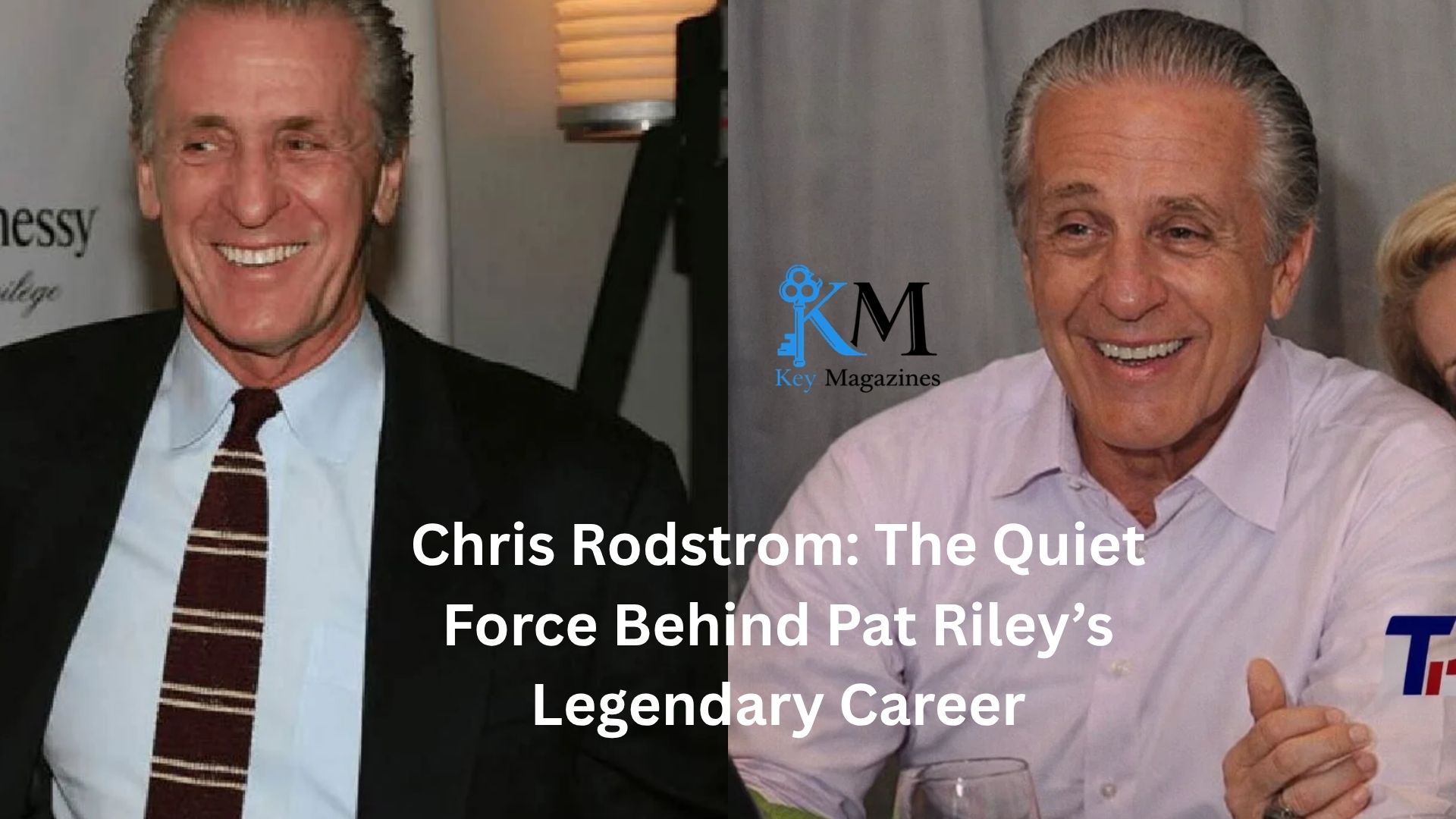
Most NBA fans know Pat Riley. The slicked-back hair. The sharp suits. The championship rings. The intense courtside stare that somehow became part of basketball culture itself.
But fewer people know much about Chris Rodstrom, the woman who stood beside him through decades of pressure, fame, relocations, and nonstop public attention.
That’s partly by design.
Chris Rodstrom has spent most of her life avoiding the spotlight, even while living close to one of the most recognizable figures in professional sports. And honestly, that’s probably what makes people curious about her in the first place. In an era where every detail of celebrity life gets posted online within minutes, someone who chooses privacy feels almost unusual now.
Still, her story is more interesting than many realize.
She wasn’t simply “Pat Riley’s wife.” Before the NBA fame fully exploded around their family, Rodstrom built her own professional identity, worked in psychology, and became an important stabilizing presence during one of basketball’s most demanding eras.
And if you look closely at Riley’s career, it becomes pretty clear that her influence mattered more than headlines ever showed.
Chris Rodstrom’s Early Life Stayed Mostly Private
One thing people quickly notice when searching for Chris Rodstrom is how little personal information exists about her early years.
That’s intentional.
Unlike celebrity spouses who eventually become media personalities themselves, Rodstrom largely stayed out of interviews and avoided building a public image. There are no dramatic tell-all stories. No reality TV moments. No constant appearances in gossip columns.
She was born in 1951 and grew up in the United States, but detailed public records about her childhood or upbringing remain limited. What is known is that she pursued education seriously and eventually entered the field of psychology.
That detail alone says a lot.
Psychology demands patience, emotional awareness, and the ability to navigate high-stress personalities. Those skills probably became useful later in ways nobody could’ve predicted.
Especially once Pat Riley’s coaching career turned into a pressure cooker.
How Chris Rodstrom Met Pat Riley
Chris Rodstrom met Pat Riley in the late 1960s while both were young and still figuring life out.
At the time, Riley wasn’t the NBA icon people know today. He had basketball ambitions, sure, but his legendary status was still years away. Like many young athletes, he was chasing opportunities while dealing with uncertainty about where his career would actually go.
That stage of life can test relationships quickly.
Long travel schedules. Financial instability. Constant career shifts. It’s not glamorous at all in the beginning, despite how sports biographies sometimes frame it later.
The couple married in 1970, long before Riley became one of the most powerful names in basketball. And that timing matters. Their relationship wasn’t built around fame because the fame hadn’t arrived yet.
There’s something grounding about relationships that begin before public attention changes everything.
A lot of couples struggle once success enters the picture. Expectations shift. Privacy disappears. Egos grow. Daily life becomes transactional. But by most accounts, Rodstrom and Riley developed a partnership early that stayed steady through every stage afterward.
Her Career in Psychology Was Real, Not Symbolic
Sometimes the spouses of famous people get reduced to background characters. That doesn’t really fit Chris Rodstrom.
She worked as a psychologist and marriage counselor before stepping away from her professional career to support her family more directly during Riley’s rise through the NBA.
And let’s be honest — being married to a high-level NBA coach during the league’s most intense decades probably required psychological expertise all by itself.
The NBA lifestyle isn’t normal.
Games every other night. Endless flights. Media pressure. Public criticism after every loss. Trade rumors. Relocations. High-profile rivalries. Emotional swings tied to performance. It can wear people down quickly.
People often see championships and assume luxury cancels out stress. It doesn’t.
In fact, high achievers frequently operate under relentless mental pressure. Riley became known for intensity, discipline, and obsession with preparation. Those traits helped build dynasties, but they can also consume personal life if there’s no balance at home.
Rodstrom reportedly played an important role in helping Riley maintain perspective away from basketball.
Not publicly. Not theatrically. Quietly.
Sometimes the strongest influence in a person’s life comes from someone who never seeks attention for it.
Life During the Showtime Lakers Era
Things changed dramatically once Pat Riley became head coach of the Los Angeles Lakers during the 1980s.
Now the spotlight was enormous.
The Showtime Lakers weren’t just a basketball team. They became a cultural phenomenon. Magic Johnson, Kareem Abdul-Jabbar, Hollywood celebrities courtside, championships, media obsession — the environment was nonstop spectacle.
And Riley became one of its central stars.
That kind of fame affects entire families, not just the person holding the microphone after games.
Imagine trying to maintain a normal home life while reporters analyze every coaching decision on national television. One bad playoff series becomes front-page news. One controversial comment dominates sports radio for days.
Most people underestimate how exhausting sustained public visibility can become.
Chris Rodstrom handled it by staying almost completely out of public drama. She attended events selectively but avoided becoming part of the entertainment machinery surrounding NBA culture in Los Angeles.
That restraint probably helped preserve stability inside their marriage.
There’s a lesson in that somewhere. Not every life needs to become public content.
Why People Respect Chris Rodstrom
A big reason people admire Chris Rodstrom today is because she represents something increasingly rare: discretion.
She never appeared interested in leveraging Pat Riley’s fame for personal celebrity. No public feuds. No oversharing. No attempts to build a media brand around private family life.
And oddly enough, that choice made people more interested in her over time.
There’s a difference between being invisible and being intentionally private.
Rodstrom’s presence has always felt deliberate. She supported Riley’s career while maintaining personal boundaries, which isn’t easy when professional sports culture constantly pushes families into the spotlight.
You see this dynamic everywhere now. Coaches’ wives, athletes’ children, relationships — everything becomes content online. Some people enjoy that exposure. Others clearly don’t.
Rodstrom belonged firmly in the second category.
Yet despite staying private, her influence remained obvious to people close to the NBA world. Riley himself has acknowledged her importance throughout his career, particularly during stressful stretches when coaching pressure became overwhelming.
That says plenty.
The Demands of Being Married to an NBA Legend
People romanticize sports marriages sometimes, but the reality is usually more complicated.
Take a normal relationship, then add:
- constant travel
- public criticism
- unpredictable schedules
- emotional highs and lows
- relocations between cities
- intense work obsession
That’s professional sports life.
Now multiply it across decades.
Pat Riley coached during some of the NBA’s most competitive periods. Lakers-Celtics rivalries. Championship expectations. Miami Heat rebuilding years. Front-office pressure. Every season carried enormous stakes.
A lot of relationships don’t survive environments like that.
Chris Rodstrom reportedly became a stabilizing force by protecting home life from becoming consumed by basketball. That separation matters more than people realize.
Anyone who’s lived with a workaholic understands the challenge. Work can slowly take over every conversation, every dinner, every weekend. Eventually there’s no emotional space left.
Rodstrom seemed to recognize that danger early.
Family Life Away From Cameras
Chris Rodstrom and Pat Riley have two children together through adoption: Elisabeth and James.
And again, the family has remained remarkably private considering Riley’s status in sports history.
That didn’t happen accidentally.
Maintaining privacy over decades requires intentional boundaries. Especially in cities like Los Angeles or Miami where sports media attention never fully stops.
There’s actually something refreshing about seeing a long-term public figure protect family life instead of constantly displaying it.
Modern celebrity culture often rewards exposure. The more personal details shared publicly, the more engagement follows. But Rodstrom and Riley largely resisted that model long before social media made oversharing common.
Their approach now feels almost old-school.
And honestly, maybe that’s part of why their marriage endured.
Chris Rodstrom’s Influence on Pat Riley’s Career
It’s impossible to measure exactly how much influence spouses have on public figures behind closed doors.
But emotional support matters. Stability matters. Honest feedback matters.
Especially for someone like Pat Riley.
Riley built his reputation on intensity. Players have described his standards as relentless. His teams reflected discipline and structure. That personality helped produce championships, but personalities driven at that level often need grounding influences nearby.
Chris Rodstrom appears to have filled that role consistently.
There’s an old pattern in sports where the public only celebrates visible leadership. The coach. The athlete. The executive making speeches. But private support systems often determine whether those people can sustain excellence long term.
Think about it this way: after a devastating playoff loss, after media criticism, after months away from home, where does someone emotionally reset?
Usually not in front of cameras.
Why Interest in Chris Rodstrom Continues Today
Search interest around Chris Rodstrom keeps growing partly because younger NBA fans discover Pat Riley and start wondering about the people around him.
And the contrast stands out immediately.
Modern sports culture is loud. Constantly online. Highly performative.
Rodstrom represents almost the opposite.
She built a meaningful professional life, supported one of basketball’s biggest figures, maintained family privacy, and avoided turning personal relationships into public entertainment.
That combination feels increasingly uncommon now.
There’s also genuine curiosity about long-lasting marriages in high-pressure industries. People want to understand how couples survive decades of fame and career obsession without imploding publicly.
No relationship is perfect, obviously. But longevity itself says something.
Chris Rodstrom and Pat Riley have been together since 1970. That’s more than five decades spanning multiple cities, championships, business pressures, and enormous public attention.
Very few couples navigate that kind of environment successfully for so long.
The Lasting Impression of Chris Rodstrom
Chris Rodstrom probably won’t ever become a highly public figure, and that’s likely exactly how she wants it.
But her story still resonates because it reflects a quieter kind of strength.
Not performative strength. Not attention-seeking resilience. Just consistency, intelligence, emotional steadiness, and the ability to maintain identity while living beside extraordinary public success.
That’s harder than it sounds.
People often assume influence must be loud to matter. Yet some of the most important people in powerful careers operate almost entirely behind the scenes.
Rodstrom fits that description perfectly.
She built a life rooted in privacy, professionalism, and long-term partnership while helping support one of basketball’s most demanding careers. And in today’s nonstop celebrity culture, that approach feels more impressive than ever.