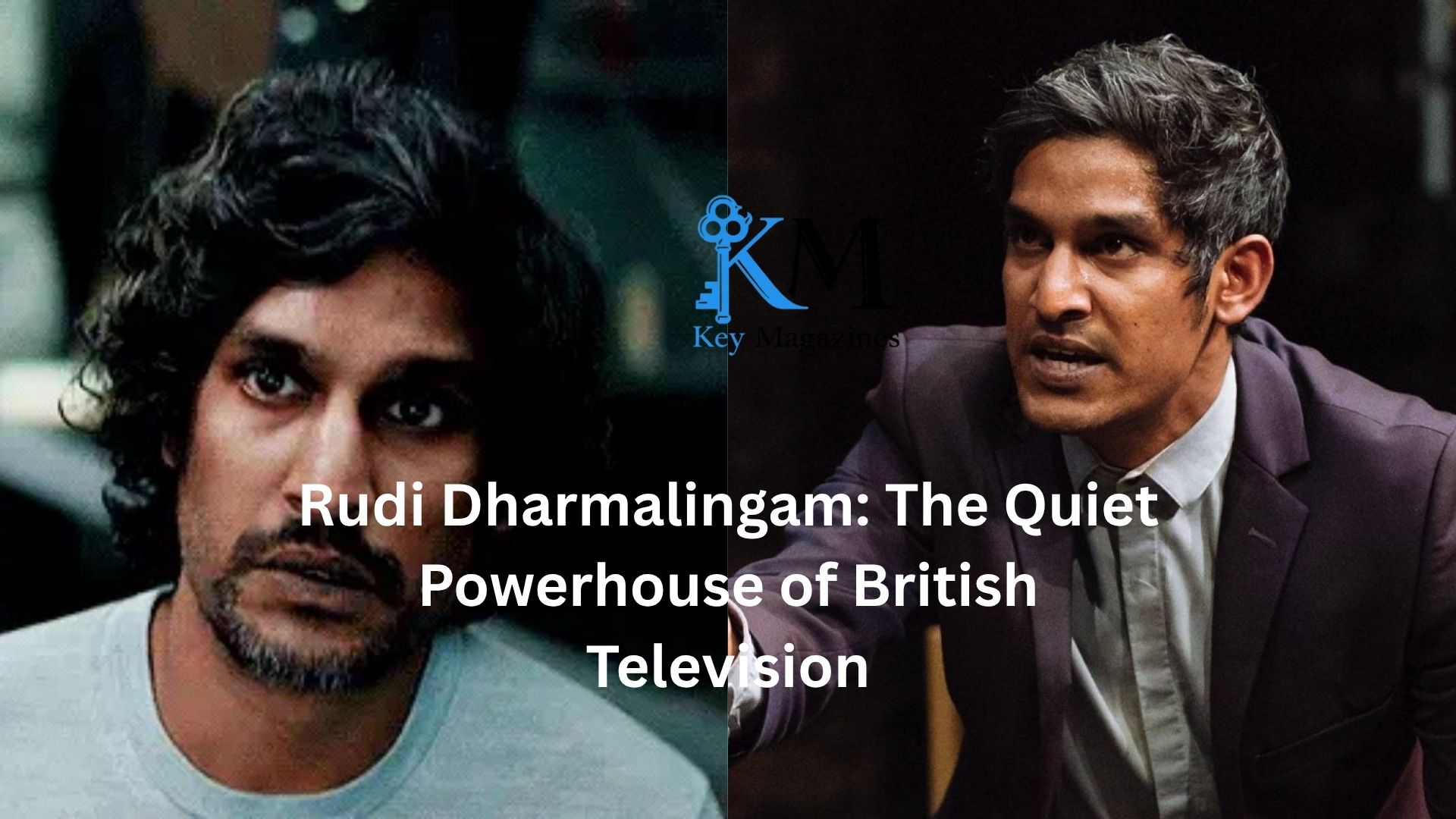
Some actors walk into a scene and demand attention instantly. Others do something more interesting. They pull you in slowly. You don’t always notice it at first, but a few episodes later, you realize they’ve become the reason you keep watching.
Rudi Dharmalingam fits squarely into that second category.
He’s not the loudest performer on screen. He doesn’t rely on oversized expressions or dramatic speeches every five minutes. What makes him stand out is control. Calmness. Precision. The kind of acting that feels lived-in rather than performed.
If you’ve watched The Split, Wakefield, Our Girl, or even some of his stage work in London theatre circles, you’ve probably seen that quality already. He has a way of making complicated characters feel believable without trying too hard to impress the audience.
That’s rarer than people think.
Rudi Dharmalingam’s Career Didn’t Follow the Typical Celebrity Route
A lot of modern actors arrive through hype machines. One viral performance, a social media explosion, a few magazine covers, and suddenly they’re everywhere.
Dharmalingam’s rise has been quieter.
Born in the UK to Sri Lankan Tamil parents, he trained at the London Academy of Music and Dramatic Art, better known as LAMDA. That detail matters because you can often spot classical theatre training in the way he performs. There’s discipline there. Timing. Restraint.
But unlike some actors with strong stage backgrounds, he never feels theatrical on screen. He adapts.
That flexibility helped him build a career across theatre, television, and film without becoming boxed into one type of role.
Early on, he appeared in British television staples like Casualty and New Tricks. Those shows have introduced audiences to countless actors over the years. They’re almost a rite of passage in British TV.
Still, guest roles only tell part of the story.
What really pushed Dharmalingam into wider recognition was his ability to handle emotionally layered characters without making them feel heavy-handed.
Why People Connected With Him in The Split
For many viewers, The Split was the moment Rudi Dharmalingam became impossible to ignore.
The BBC legal drama already had a strong cast and sharp writing. Family tension. Divorce law. Complicated relationships. Plenty of emotional material to work with.
Dharmalingam played James Cutler, and what stood out wasn’t flashy drama. It was emotional realism.
James felt like someone you might actually know. Intelligent, supportive, occasionally frustrating, but deeply human. That’s harder to pull off than playing a stereotypical “difficult genius” or charismatic antihero.
A scene doesn’t need shouting to feel intense. Sometimes tension lives in hesitation. A glance across the room. A conversation that sounds normal but clearly isn’t.
Dharmalingam understands that rhythm very well.
You could see it especially in scenes involving marriage strain and emotional distance. Instead of overplaying conflict, he leaned into discomfort. That made the character relatable in a way many TV relationships aren’t.
Let’s be honest. Most people have been part of conversations where everyone avoids saying what they truly mean. The Split captured that beautifully, and Dharmalingam’s performance was a big reason why.
He Has a Theatre Actor’s Attention to Detail
There’s something different about actors who spend serious time on stage.
Television can sometimes reward speed. Theatre rewards consistency. You can’t rely on editing or multiple camera angles when performing live in front of hundreds of people every night.
Dharmalingam built a strong theatre reputation before many mainstream viewers knew his name.
He performed with respected institutions including the Royal Shakespeare Company and the National Theatre. Those aren’t small credits tucked away on a résumé. They’re demanding environments where audiences notice every weak moment instantly.
One thing theatre tends to sharpen is listening.
That sounds obvious, but many actors are really just waiting for their turn to speak. Dharmalingam actually reacts. You can see thoughts moving across his face while another character talks.
It gives scenes texture.
There’s a moment many viewers probably miss consciously but still feel emotionally. An actor pauses half a second longer than expected. Their expression shifts slightly. Suddenly the scene feels authentic instead of scripted.
Dharmalingam uses those small details constantly.
Wakefield Showed Another Side of His Range
If The Split highlighted emotional subtlety, Wakefield revealed how effectively he could carry psychological complexity.
The Australian drama series placed him front and center as Nik Katira, a psychiatric nurse working in a mental health facility while battling his own internal struggles.
That role could have gone wrong in many hands.
Mental health stories often drift into clichés. Either the character becomes unrealistically stoic or overwhelmingly chaotic. Wakefield avoided that trap partly because Dharmalingam grounded the role in ordinary human behavior.
Nik wasn’t presented as a dramatic symbol of trauma. He felt like a person trying to function while quietly unraveling.
There’s a difference.
Viewers responded strongly because the performance avoided melodrama. Anxiety and emotional pressure often appear gradually in real life. Small cracks first. Exhaustion. Disconnection. Confusion creeping in around the edges.
Dharmalingam captured that progression carefully.
The result was one of the more memorable television performances in recent years, especially for audiences tired of exaggerated portrayals of mental health.
Representation Matters, But So Does Normalization
Rudi Dharmalingam’s success also matters within the broader conversation about representation in British media.
For years, South Asian actors in UK television were frequently pushed into narrow categories. Certain accents. Certain stereotypes. Certain storylines.
Things have improved, though not perfectly.
What makes Dharmalingam interesting is that many of his roles aren’t built entirely around ethnicity. He plays complex professionals, husbands, emotionally conflicted men, authority figures, vulnerable characters. In other words, people.
That shouldn’t feel revolutionary, but historically it often was.
There’s real value in seeing actors from different backgrounds exist naturally within mainstream stories rather than being treated as “issue-based” casting.
And yet, he also doesn’t erase cultural identity from his work. The balance feels natural instead of forced.
That balance probably explains why audiences connect with him across very different demographics.
He Brings Intelligence Without Pretension
Some actors specialize in playing “smart” characters by speaking quickly and looking serious all the time.
Dharmalingam does something subtler.
His characters often feel intelligent because they observe carefully. They process before reacting. That creates a sense of emotional intelligence rather than scripted cleverness.
It’s especially noticeable in relationship-driven dramas.
Take a familiar real-life scenario: someone walks into a room after an argument pretending everything’s fine. Most people won’t announce their feelings directly. They’ll avoid eye contact. Overcompensate. Become unusually polite.
Dharmalingam’s performances often live in those spaces.
That’s why his work tends to age well after viewing. You notice more on rewatch because the acting isn’t built around obvious moments designed for social media clips.
Quiet performances rarely trend online the way explosive scenes do. But they stay with people longer.
British Television Is Built for Actors Like Him
There’s a reason performers like Rudi Dharmalingam thrive particularly well in British television.
UK dramas often allow room for ambiguity. Characters can be flawed without becoming villains. Emotional tension can simmer quietly instead of exploding every ten minutes.
American television sometimes pushes for sharper dramatic peaks. British dramas frequently trust silence more.
Dharmalingam fits naturally into that environment.
He excels at portraying emotional contradiction. Someone can be caring and selfish. Confident and insecure. Loving yet emotionally unavailable.
Real people are inconsistent. His characters usually are too.
That realism gives his performances durability.
You might forget plot details from a show after a few years, but you remember how certain characters made you feel. That emotional memory is often where strong acting leaves its mark.
Fame Doesn’t Seem to Be the Main Goal
One interesting thing about Dharmalingam’s career is that it doesn’t feel aggressively engineered toward celebrity status.
Some actors build public personas almost as carefully as their acting careers. Endless interviews. Constant visibility. Viral moments designed for attention.
Dharmalingam has maintained a lower profile compared to many performers with similar talent levels.
There’s something refreshing about that.
It keeps focus on the work itself. Audiences engage with the characters first rather than carrying heavy baggage from celebrity culture into every role.
That separation is becoming increasingly rare.
And oddly enough, it may strengthen audience trust. When actors aren’t oversaturated publicly, performances feel fresher. More believable.
His Best Quality Might Be Emotional Credibility
At the center of everything, this is probably what defines Rudi Dharmalingam most clearly: emotional credibility.
You believe him.
That sounds simple, but it’s the entire job.
Whether he’s playing a strained husband, a psychiatric nurse, or a conflicted professional, he avoids the polished artificiality that can make television performances feel manufactured.
He leaves room for uncertainty.
People in real life don’t always express emotions clearly. Sometimes they contradict themselves. Sometimes they hide things from others while barely understanding themselves.
Dharmalingam performs those emotional gray areas extremely well.
And audiences notice, even if they can’t always explain why.
The Appeal of Actors Who Don’t Oversell
Modern entertainment often rewards extremes.
Bigger reactions. Bigger personalities. Bigger drama.
But viewers eventually get tired of feeling manipulated. They start craving performances that resemble actual human behavior again.
That’s where actors like Rudi Dharmalingam become especially valuable.
He trusts the audience enough not to overexplain every emotion. He lets scenes breathe. He allows discomfort to exist naturally without immediately resolving it.
Those choices create richer storytelling.
A lot of people have probably had the experience of watching one of his scenes and thinking afterward, “That felt real.” Not dramatic. Not cinematic. Real.
That reaction matters more than flashy awards speeches or viral clips.
Final Thoughts on Rudi Dharmalingam
Rudi Dharmalingam has built one of the most quietly impressive acting careers in modern British television.
Not through noise. Not through controversy. Not through celebrity branding.
Through consistency.
He brings intelligence, restraint, and emotional realism to roles that could easily become generic in less capable hands. Whether on stage or screen, he understands how people actually behave, and that understanding gives his performances unusual depth.
Some actors chase attention. Others earn trust from audiences over time.
Dharmalingam belongs firmly in the second group.
And honestly, those are often the actors people remember longest.