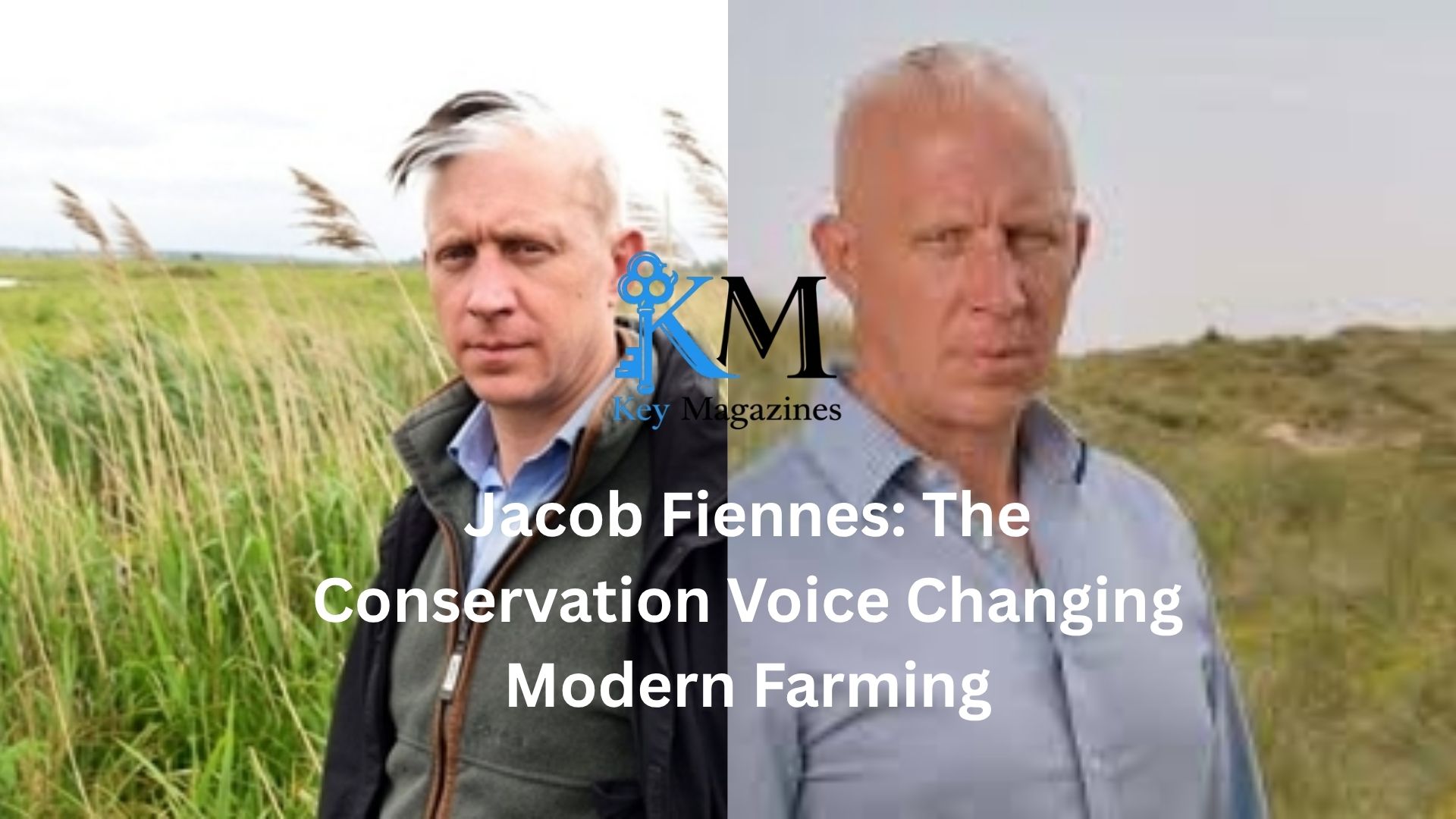
Most people hear the name Fiennes and think of actors, films, red carpets, or maybe even British aristocracy. Jacob “Jake” Fiennes went another direction entirely. He chose muddy boots over movie sets. Wetlands instead of premieres. Birds, soil, hedgerows, and farming systems became his world.
And honestly, that’s probably what makes him interesting.
Jake Fiennes has become one of the most recognizable voices in British conservation and regenerative farming, not because he sounds polished or overly scientific, but because he talks about land in a way that feels practical and lived-in. You get the sense that he’s spent more time standing in cold fields at sunrise than sitting in conference rooms. That matters.
He’s now widely known for his work at the Holkham Estate in Norfolk, where he’s pushed for a style of farming that works with nature instead of against it. It sounds simple when you say it out loud. In practice, it’s complicated, messy, expensive, political, and sometimes deeply unpopular.
Still, Fiennes keeps pushing.
A Different Kind of Fiennes
Jake Fiennes grew up in the same unusual creative family as actors Ralph Fiennes and Joseph Fiennes, but his path never really fit the celebrity mold. While his siblings became household names in film and television, Jake found himself pulled toward countryside management and wildlife conservation.
That split actually says a lot about him.
There’s something refreshingly unfiltered in the way he speaks about the environment. He doesn’t come across like someone trying to build a personal brand around sustainability. He sounds more like the experienced estate manager who’s frustrated that people keep making farming harder than it needs to be.
And here’s the thing. That bluntness has helped him connect with farmers who normally roll their eyes when conservationists show up telling them how to manage land.
A lot of environmental debates become tribal very quickly. Farmers on one side. Activists on the other. Politicians somewhere in the middle pretending to understand either group.
Jake Fiennes operates in the uncomfortable middle ground where real change usually happens.
Why Holkham Matters
At Holkham Estate, Fiennes oversees conservation work across one of England’s most important rural landscapes. The estate includes farmland, marshes, nature reserves, coastline, and woodland. It’s massive. More importantly, it functions like a real-world test case for balancing food production with biodiversity.
That balance is the whole conversation now.
For years, modern agriculture focused heavily on yield. Bigger harvests. Faster production. More chemicals. Straighter fields. Cleaner-looking land. On paper, it worked.
But the side effects piled up quietly.
Bird populations collapsed in some areas. Pollinators declined. Soil quality weakened. Rivers became overloaded with runoff. Many farmers themselves started realizing the system wasn’t sustainable long term.
Fiennes talks about this without pretending farmers are villains. That’s one reason people actually listen to him.
He often points out that many damaging farming practices were encouraged by policy and subsidies in the first place. Farmers followed incentives. That’s what industries do.
Now the challenge is reversing decades of ecological damage without wrecking food production.
No small task.
The “Land Sharing” Idea
One of Jake Fiennes’ core ideas is something called land sharing. Instead of separating nature reserves from productive farmland completely, he argues that wildlife should exist throughout working landscapes.
That might sound obvious to someone who grew up around countryside landscapes, but modern agriculture often pushed nature into isolated pockets.
A simple example helps.
Imagine driving through farmland where every field edge is stripped clean, hedges are tightly cut, and there’s barely an insect in sight. Technically efficient. Ecologically dead.
Now picture a field with wider hedgerows, wildflower strips, wetter margins, patches left rough for insects and birds, and healthier soil underneath. Crops still grow there. Food still gets produced. But wildlife can survive too.
That’s closer to what Fiennes pushes for.
Not untouched wilderness. Functional coexistence.
And to be fair, it’s easier to support this idea when you’re standing somewhere beautiful. A butterfly-filled meadow tends to win people over faster than a policy report does.
He Speaks Farmer, Not Activist
This part matters more than people realize.
Jake Fiennes understands agricultural language and culture because he’s spent decades inside it. He’s worked in gamekeeping, estate management, and conservation for over 30 years.
So when he talks to farmers about changing practices, he doesn’t approach them like an outsider arriving with moral lectures.
He talks about efficiency. Soil resilience. Water retention. Long-term productivity.
That changes the tone immediately.
Let’s be honest, most people don’t respond well to being blamed for everything. Especially people already dealing with rising costs, unpredictable weather, and shrinking margins.
Fiennes seems to understand that if conservation becomes a culture war, everyone loses.
There’s also a practical realism in the way he frames environmental recovery. He knows food still needs to be produced. He’s not pretending Britain can suddenly turn every field into a rewilded nature reserve.
Instead, he asks a more grounded question: how do you make farmland healthier without collapsing the farming economy?
That’s a harder conversation. But probably the more useful one.
The Personality Factor
Part of Jake Fiennes’ growing popularity comes down to personality.
He’s not polished in the corporate sustainability sense. Interviews with him often include swearing, self-deprecating humor, and stories about birds, mud, and chaotic countryside life.
Oddly enough, that makes him credible.
There’s a certain exhaustion people feel toward overproduced environmental messaging. You know the type. Everything sounds rehearsed. Every sentence feels approved by five communications teams.
Fiennes sounds like someone who just got back from checking wetlands in bad weather.
That rough edge works.
Even his struggles with dyslexia and formal education have shaped the way he communicates. He’s spoken openly about impostor syndrome despite becoming a respected figure in conservation circles.
That vulnerability gives his work a more human feel. He doesn’t present himself as some flawless environmental guru. He talks more like a guy who learned through experience, mistakes, observation, and time spent outdoors.
People trust that.
Regenerative Farming Isn’t Just a Trend
You hear the phrase “regenerative agriculture” everywhere now. Food brands use it. Politicians mention it. Farms market themselves around it.
Sometimes it feels a little buzzword-heavy.
But underneath the marketing noise, the basic ideas are fairly grounded. Healthier soil. Reduced chemical dependence. Crop diversity. Better water systems. More biodiversity.
Jake Fiennes has become one of the better-known advocates for these principles in the UK.
And unlike some social media sustainability figures, he’s actually managing land at scale.
That’s important because theory changes once real economics enter the picture.
For example, leaving parts of fields for wildlife sounds great until you’re explaining lost acreage to a farmer worried about next season’s income. Fiennes often tries to frame ecological improvements as long-term investments rather than sacrifices.
Sometimes that means changing tiny details.
A wider hedge.
Less aggressive mowing.
Different grazing patterns.
A restored wetland.
None of it sounds dramatic individually. Together, though, those changes can reshape an entire landscape over time.
Nature recovery often works like that. Quietly.
Why People Outside Farming Should Care
It’s easy to think this is only a countryside issue. It isn’t.
Food systems affect everyone. So does biodiversity loss.
When insect populations collapse, pollination changes. When soil weakens, farming becomes less resilient during floods and droughts. When wetlands disappear, flooding often worsens downstream.
These aren’t abstract environmental talking points anymore. People are seeing the effects directly.
Even city residents who’ve never stepped inside a wheat field are connected to these systems every day through food prices, water quality, and climate impacts.
That broader connection is part of why Jake Fiennes’ message resonates beyond farming circles.
He talks about land in a way that feels immediate rather than ideological.
And honestly, many people are tired of ideology.
They want solutions that seem practical enough to survive real life.
The Bigger Challenge Ahead
The difficult truth is that conservation alone won’t solve the pressures facing modern agriculture.
Farmers still face economic realities. Governments change policies constantly. Climate patterns are becoming less predictable. Consumers demand cheap food while also wanting environmentally responsible production.
Those goals often collide.
Jake Fiennes doesn’t pretend otherwise.
That may be one reason his work stands out. He acknowledges complexity instead of reducing everything to easy slogans.
There’s also something quietly hopeful in his approach. He believes damaged landscapes can recover if people work with natural systems rather than overpower them.
And there’s evidence for that.
At Holkham, species recovery, healthier wetlands, and biodiversity improvements have already been documented through changes in land management.
Not perfect recovery. Not some fantasy version of untouched nature.
Just measurable improvement.
Sometimes that’s enough.
What Jacob Fiennes Really Represents
At this point, Jake Fiennes represents something bigger than one estate or one conservation project.
He represents a shift in tone.
For years, environmental conversations often felt divided between extremes. Industrial farming on one side. Pure preservation on the other.
Fiennes sits somewhere in between. Practical but ambitious. Rural but forward-looking. Critical of damaging systems without dismissing the people inside them.
That middle ground is messy. It also happens to be where lasting change usually starts.
And maybe that’s why people keep paying attention to him.
Not because he claims to have all the answers.
But because he sounds like someone willing to stand in the field long enough to figure them out.