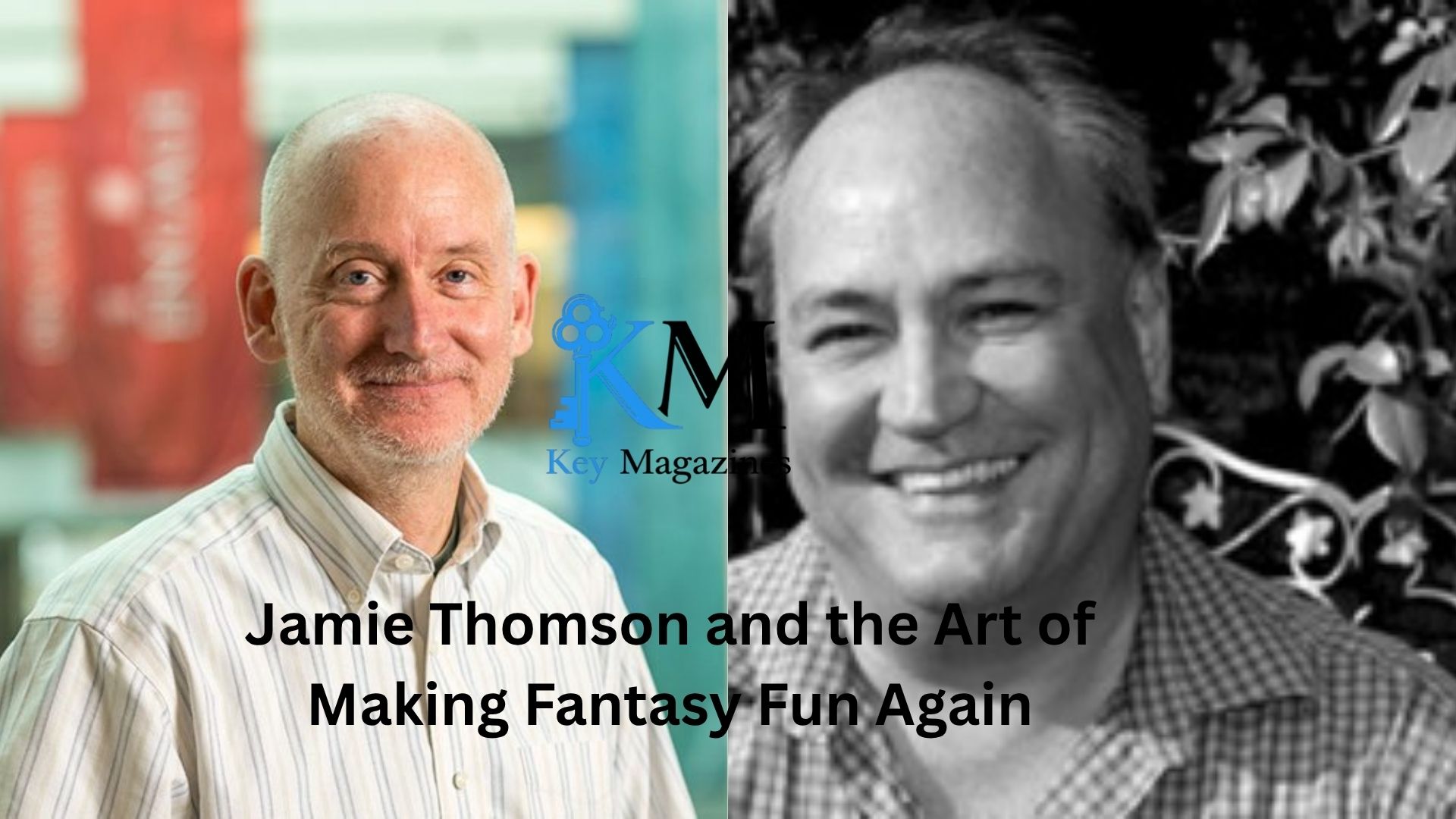
There’s a certain kind of writer who doesn’t just tell stories. They build worlds that feel slightly dangerous, weirdly funny, and impossible to leave once you’ve stepped inside. Jamie Thomson fits neatly into that category.
If you grew up around gamebooks, fantasy adventures, or the kind of stories where bad decisions could get your character eaten by a swamp creature three pages later, chances are you’ve crossed paths with his work already. Maybe without even realizing it.
Jamie Thomson has spent decades creating fantasy worlds that don’t take themselves too seriously while still pulling readers in completely. That balance sounds easy until you try doing it. Most writers lean too hard in one direction. Too grim. Too silly. Too safe. Thomson found a middle ground that feels surprisingly rare now.
And honestly, that’s probably why people still talk about his books years later.
The writer who made readers part of the story
A lot of fantasy writers want readers to admire the hero. Jamie Thomson often wanted readers to be the hero. Or at least survive long enough to pretend they were.
That’s where his connection to gamebooks became so important.
Back in the golden era of interactive fiction, books weren’t always passive entertainment. Readers made choices. Open the wrong door? Dead. Trust the suspicious wizard? Probably dead again. It was chaotic in the best way.
Thomson became widely known through the Fighting Fantasy world and later projects connected to interactive storytelling. Those books had energy. Real momentum. You could feel the influence of tabletop gaming running through the pages.
And here’s the thing: interactive fiction sounds gimmicky until it’s done well.
When it works, it creates tension regular novels sometimes can’t match. Suddenly every choice matters. Readers stop skimming because they’re involved. That’s a very different experience from simply observing a story unfold.
Jamie Thomson understood that instinctively.
Dark Lord deserves more attention than it gets
If there’s one series that captures Thomson’s style perfectly, it’s probably Dark Lord.
The premise alone tells you what kind of writer he is.
A dark overlord from another dimension gets trapped in the body of a human teenager in modern England. Instead of commanding armies of darkness, he has to survive school, social awkwardness, and ordinary life.
It’s absurd. But it works because the emotional core underneath the comedy feels real.
Anyone who’s ever felt out of place can connect with that setup instantly. The fantasy angle just makes the awkwardness louder and funnier.
One of the smartest things about Dark Lord is how casually it flips fantasy clichés upside down. Evil overlords usually arrive with terrifying speeches and giant battles. Thomson drops his into school corridors and lets teenage life become the real horror.
Honestly, there’s something refreshing about fantasy that remembers it’s allowed to be entertaining.
Too much modern fantasy treats seriousness like proof of quality. Endless grim kingdoms. Emotionally damaged assassins. Rain-soaked politics. Everybody whispering prophecies at each other.
Jamie Thomson goes another direction. His stories still have stakes, but they also have personality. Humor. Ridiculous moments that make characters feel alive.
Readers remember that stuff.
Why his humor actually lands
Fantasy humor is harder to write than people think.
A lot of it ends up feeling forced, like the author stopped the story to crack jokes directly at the audience. That gets old fast.
Thomson’s humor usually grows out of character reactions instead. That’s why it feels natural.
An all-powerful dark ruler complaining about school rules is funny because the character genuinely sees the situation as insulting. The comedy comes from perspective, not punchlines pasted onto the page.
There’s also something very British about the rhythm of his writing. Dry observations. Understated reactions. Moments where characters treat absurd situations as mildly inconvenient.
That style ages surprisingly well.
Think about the difference between a joke built around internet trends versus one built around human behavior. One fades quickly. The other sticks around because people don’t really change that much.
Teenagers still panic about fitting in. Adults still bluff confidence. Authority figures still make strange decisions. Thomson taps into those familiar tensions while wrapping them inside fantasy settings.
That combination gives his books replay value.
He writes fantasy without talking down to younger readers
This matters more than people admit.
Some writers simplify stories for younger audiences so aggressively that the books lose all personality. Everything becomes predictable. Safe. Overexplained.
Jamie Thomson generally avoids that trap.
His books trust readers to keep up.
Characters make messy decisions. Consequences appear suddenly. Strange world-building details get introduced without giant explanations attached to them. Readers are expected to piece things together naturally.
That creates engagement.
A twelve-year-old reader doesn’t necessarily want simpler ideas. They usually want stories that respect their intelligence while still being fun. Thomson seems to understand that balance very well.
You can see it especially in the pacing. His stories move quickly, but they rarely feel rushed. There’s always another problem appearing around the corner.
It reminds me a bit of those nights when someone says, “Just one more chapter,” and suddenly it’s past midnight.
Good adventure writing creates that momentum.
The gaming influence shaped his storytelling
You can feel gaming DNA throughout Jamie Thomson’s work.
Not just video games either. Tabletop games. Role-playing systems. Decision-based storytelling. Risk and reward mechanics. Exploration.
That background changes how stories get structured.
Traditional novels often move in straight lines. Beginning, middle, end. Interactive storytelling teaches writers to think differently. Multiple possibilities. Hidden consequences. Alternate outcomes.
Even when Thomson writes conventional fiction, there’s still a sense that anything could happen next.
Readers stay alert because the world feels unpredictable.
That unpredictability matters in fantasy especially. Too many fantasy stories become formulaic halfway through. You can practically hear the plot machinery grinding away underneath the scenes.
Hero gathers allies. Ancient evil rises. Big battle arrives on schedule.
Jamie Thomson’s work tends to feel looser than that. More playful. More willing to throw unexpected complications into the mix.
It creates a different reading experience altogether.
There’s a reason cult audiences stick with him
Some writers become massive global names. Others build fiercely loyal audiences over time.
Jamie Thomson falls closer to the second category.
His readers tend to remember his books vividly because they encountered them at exactly the right age. Usually during that period when imagination feels limitless and stories hit harder emotionally.
That kind of connection lasts.
You see it all the time online. Someone casually mentions Dark Lord or an older gamebook title, and suddenly people start swapping memories about reading under blankets with flashlights or trying not to die on page 47 for the fifth time.
Those aren’t just nostalgic reactions. They’re signs of stories that genuinely created experiences.
Interactive fiction especially leaves stronger memory traces because readers participated actively. You weren’t just watching events unfold. You were choosing paths, making mistakes, surviving disasters.
Even failure became entertaining.
Actually, especially failure.
There’s something uniquely funny about getting wiped out by a terrible decision you made yourself three pages earlier.
Fantasy changed, but his style still feels fresh
Fantasy publishing has changed massively since Thomson first started writing.
The genre became darker for a long stretch. Then came waves of hyper-detailed lore-heavy epics. More recently, there’s been a shift toward emotionally driven fantasy with sharper humor and faster pacing.
Oddly enough, Jamie Thomson’s approach fits modern tastes pretty well despite predating many of those trends.
Readers today often want fantasy that’s imaginative without becoming exhausting. Funny without turning into parody. Emotional without drowning in melodrama.
That balance is difficult.
Thomson’s books usually understand when to keep moving. They don’t get trapped explaining every kingdom, every magical rule, every historical conflict stretching back eight thousand years.
Sometimes a story just needs momentum.
A monster appears. Someone panics. Chaos follows. Great. Keep going.
That confidence keeps the pages alive.
His work understands escapism properly
Escapism gets dismissed sometimes like it’s automatically shallow. I’ve never really agreed with that.
Good escapism isn’t about avoiding reality completely. It’s about approaching real emotions from a different angle.
Jamie Thomson’s fantasy worlds may include dark lords, monsters, and magical disasters, but underneath the surface the stories often revolve around familiar experiences. Isolation. Embarrassment. Powerlessness. Identity.
The fantasy elements amplify those feelings rather than replacing them.
A teenager trying to survive school politics doesn’t suddenly become less relatable because he also happens to be an exiled ruler from another dimension.
If anything, the fantasy framing makes awkward experiences easier to laugh at.
And people need that.
Especially younger readers who are still figuring themselves out.
What newer fantasy writers could learn from him
One lesson stands out immediately: stop overcomplicating everything.
Jamie Thomson’s writing works because it stays connected to entertainment first. That doesn’t mean the stories lack depth. It means readability matters.
Some modern fantasy novels feel like homework assignments with dragons attached.
Thomson remembers that stories are supposed to pull readers forward naturally.
Another lesson? Tone matters.
Writers often underestimate how difficult tonal control really is. Mixing comedy with genuine stakes can collapse instantly if handled poorly. Too much humor destroys tension. Too much seriousness kills the fun.
Thomson manages those shifts smoothly because the characters remain emotionally grounded even during ridiculous situations.
That’s the trick.
Readers will follow absurd plots if the reactions inside them feel believable.
The legacy of interactive storytelling still matters
Interactive fiction never completely disappeared, but it definitely evolved.
Now you can see its influence everywhere. Narrative-heavy video games. Choice-based storytelling apps. Branching TV experiments. RPG systems built around player decisions.
Jamie Thomson was working with those ideas long before they became trendy again.
That’s worth remembering.
A lot of current storytelling trends trace back to writers and creators who experimented early, often without mainstream attention. Thomson belongs in that conversation.
His work helped shape how readers thought about participation in storytelling. Not just consuming stories passively, but entering them.
That idea feels normal now. Decades ago, it felt innovative.
Why readers still discover his books today
Some books survive because schools assign them.
Others survive because readers keep recommending them to friends, younger siblings, or their own kids years later.
Jamie Thomson’s work falls into the second category.
There’s a lived-in quality to his storytelling that makes the books easy to revisit. The humor still lands. The pacing still moves. The fantasy elements still feel imaginative without becoming inaccessible.
And maybe most importantly, the stories remember to have fun.
That sounds simple, but it really isn’t.
A lot of writers chase importance so aggressively that they forget readers want enjoyment too. Thomson never seems embarrassed by entertainment. His books embrace adventure, weirdness, danger, and comedy openly.
That confidence gives the stories energy.
At the end of the day, Jamie Thomson’s biggest strength might be this: he understands that fantasy works best when it sparks curiosity. When readers want to keep turning pages not because they’re obligated to, but because they genuinely want to know what ridiculous thing happens next.
That instinct can’t really be faked.
And it’s probably why his stories continue finding readers long after the first publication dates faded into the background.